Palo Alto highlight
Historic downtown
A tree-lined commercial and community center developed from two origins—the 1855 stagecoach settlement of Mayfield and the planned 1894 townsite created by the Stanfords—merged into one downtown in 1925.
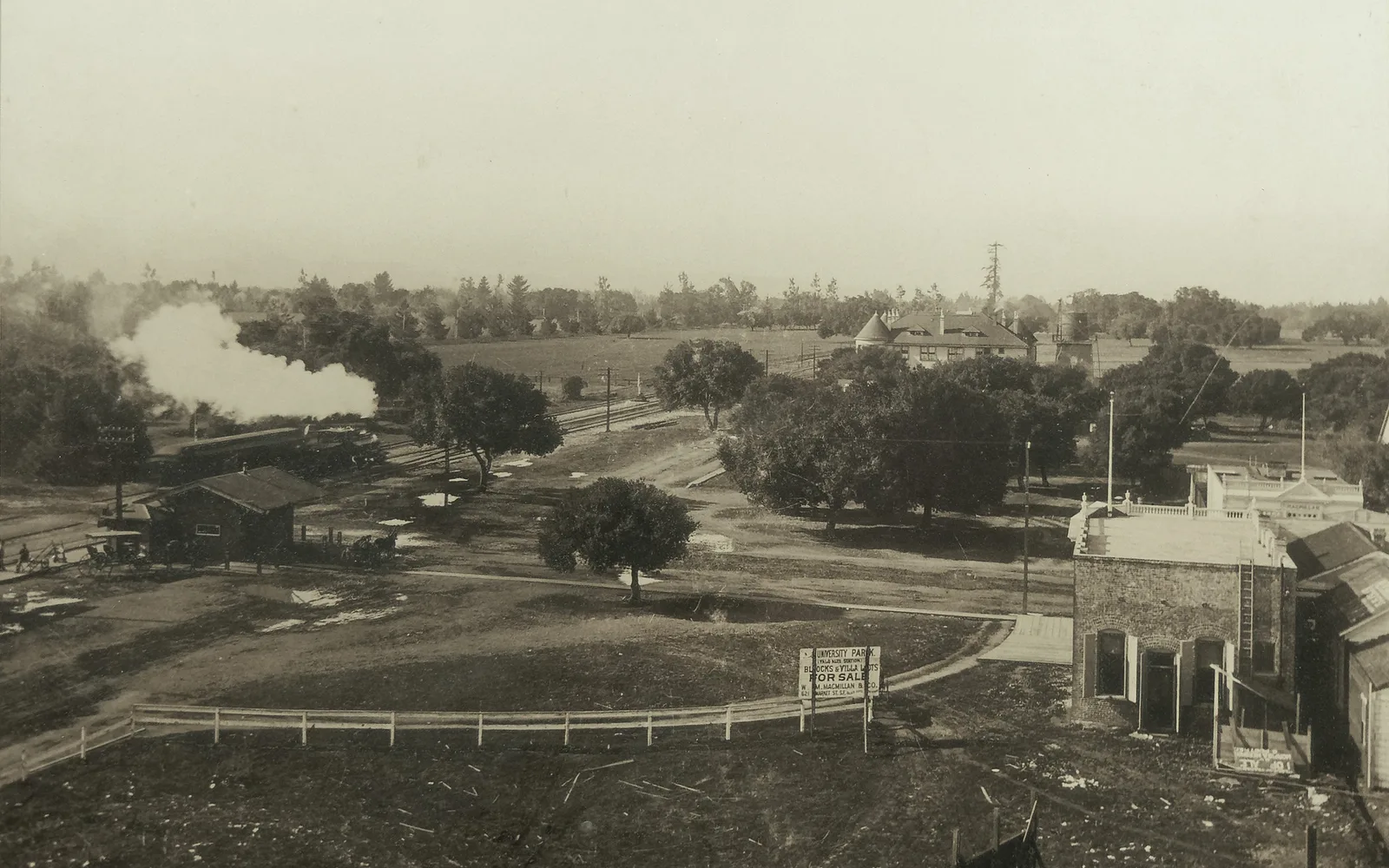
Palo Alto's downtown grew from two distinct communities. Mayfield emerged in 1855 around a stagecoach stop and saloon near present-day California Avenue, serving travelers and local ranch hands. When Leland and Jane Stanford acquired land for their university, they envisioned a different kind of community alongside it—one built on temperance principles and modern planning. This new townsite of Palo Alto was incorporated on April 16, 1894, creating a deliberate contrast to the existing settlement.
For decades the two downtowns coexisted along different streets, each with its own character and commercial life. Palo Alto proper developed around University Avenue while Mayfield's activity centered on California Avenue. The boundary between them reflected the difference in their origins—one planned from the ground up, the other grown organically from daily convenience. In 1925, Palo Alto voters approved the annexation of Mayfield, uniting the two communities and expanding downtown into the tree-lined, mixed-use district it remains today.
A downtown that blends old and new—from the stagecoach-era streets to twentieth-century commercial development—tends to attract families and households that value stability mixed with opportunity. Life insurance planning often follows the same path: it honors the life you have now while protecting against the disruption that would hit hardest at the moments that matter most.